Facility put on probation, but free to take new clients
By Kirsten Stewart
The Salt Lake Tribune
October 13, 2007
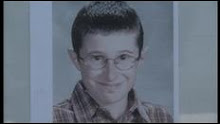
A residential youth treatment center was cited on Friday for providing inadequate medical care to Brendan James Blum, a 14-year-old California boy who died at its Draper facility.
Utah licensers placed Youth Care of Utah on probation, requiring the center to, among other requirements, retool employee training. Youth Care was not fined and it is free to accept new clients, though no more than five every 30 days.
The disciplinary action was reached as part of a settlement between the facility and lawyers for the state Human Services Office of Licensing, which regulates Utah's teen-help industry.
Licensing director Ken Stettler said he hopes Friday's action shows the state takes its watchdog role seriously. It comes a day after criminal neglect charges were filed against two former Youth Care counselors in connection with Brendan's June 28 death.
It also coincides with a congressional probe into wilderness camps, which detailed thousands of cases of abuse nationwide since 1990. Of 10 deaths detailed in the federal report, five occurred in Utah.
The cases showed a pattern of lax government oversight and medical neglect, with counselors assuming the teens were making up their symptoms.
Brendan Blum's mother, Dana Blum, fears the same issues may have played a role in her son's death.
Blum said she "feels" for the employees at Youth Care, but said the facility should have been shut down, at least temporarily, and the owners held accountable.
"Nothing will bring Brendan back," said Blum. "But the bottom line is that when a parent makes a difficult decision to place their child in a treatment program, the management and caretakers have a responsibility to ensure their safety. There shouldn't be any tolerance for the death of a child."
Sent to bed
Blum said the coroner described her son's death as "violent and painful." An autopsy concluded that he died after his bowel twisted, cutting off the blood supply to his small intestine.
Brendan had vomited and been suffering diarrhea all night, according to police. Instead of phoning the on-call nurse, per Youth Care's policy, counselors treated the boy with an over-the-counter medicine and sent him to bed, said Draper police Sgt. Gerry Allred.
The next morning, Brendan, who had Asperger's syndrome, a form of autism, was found dead on his mattress.
The on-call nurse, who was later interviewed by police, said had she been consulted, she would have advised sending Brendan to the hospital, said Allred. The Utah State Medical Examiner said with medical intervention, the boy might have survived.
'Flu-like' symptoms
Youth Care officials maintain Brendan complained only of "flu-like" symptoms.
"We extend our deepest sympathies to the family, and we continue to work closely with Utah officials and law enforcement. But we are confident a criminal prosecution will be found unwarranted," said Kristen Hayes, spokeswoman for Aspen Education Group, which owns Youth Care.
Based in Cerritos, Calif., Aspen is a division of the CRC Health Group, which runs boarding schools, outdoor education programs and weight-loss camps.
For two decades, Youth Care has "delivered the highest standards of care," treating more than 1,300 children with behavioral and addiction problems last year, said Hayes. "All of Aspen's programs either meet or exceed state and national standards."
Aspen's record
Stettler confirmed Aspen's reputation, saying, "They've had a pretty spotless record."
Three of four recent deaths at Utah treatment programs, however, happened at Aspen facilities: Blum's and two suicides; one in July 2004 at Island View Academy in Syracuse, and another in April at Aspen Achievement Academy of Loa.
Stettler said the April suicide remains under investigation by law enforcement, but his own probe found Aspen wasn't at fault. The suicide at Island View happened before Aspen purchased the facility.
Blum said she thoroughly researched Youth Care and Aspen and was never told of the fatalities.
If nothing else, I would like to see them create a searchable database so parents can review deaths and complaints and not have to rely on the subjective descriptions of licensors," said Blum.
The Web site of state licensors has contact information for facilities and shows whether their license is in good standing. But for more detailed information, parents need to phone regulators, who keep only paper files.
Sense of justice
Blum has "taken heat" for enrolling Brendan at Youth Care, but she says research shows behavioral modification programs can work for children with Asperger's.
"The real problem is there are not adequate community resources for kids with mental health problems," said Blum.
Brendan was "erratic and unpredictable," and started acting aggressively at age 3, said Blum. "There were no consequences that were meaningful to him. You could take away privileges with friends, TV, or PlayStation. It didn't matter."
Trips to her county mental health facility, school counselors and private therapists yielded no firm diagnosis.
It wasn't until Brendan turned 13 and got swept up in the juvenile justice system that doctors at a local university diagnosed him with Asperger's.
"They said he was a textbook case of high-functioning autism and should have been diagnosed at age 8," said Blum.
Brendan had a "fine-tuned sense of justice. As his mother, I feel I need to make sure Youth Care is held accountable," said Blum.
"These kids come from families that care about them. They're not just throwaway kids."
kstewart@sltrib.com
Showing posts with label Aspen Education Group. Show all posts
Showing posts with label Aspen Education Group. Show all posts
Wednesday, October 17, 2007
Saturday, October 13, 2007
BRENDAN BLUM: Boy found dead at Draper group home

June 30, 2007
The Associated Press
SALT LAKE CITY -- A southern California boy died at a group home in Draper, apparently in his sleep.
The 14-year-old boy awoke early Thursday complaining of stomach and bowel problems, was placed in a separate room from other kids and found dead the next morning, said Carol Sisco, spokeswoman for Utah Department of Human Services.
"We are interviewing everyone involved who was in the unit at the time," Draper police Sgt. Gerald Allred said.
Allred and other police officials were unavailable Friday to comment on whether an autopsy had revealed a cause of death for the boy, who entered the group home in February. His name was not released.
The boy died of a "medical condition," Trina Packard, executive director of the Youth Care & Pine Ridge Academy, said in a statement issued Friday. Packard didn't specify the medical condition or say why she was certain he died of it, and she didn't return a message left by The Associated Press.
"We are extremely saddened" by the boy's death, she said, pledging to cooperate with authorities. "We are providing therapeutic services to the boy's family, as well as counseling services for our own staff and students."
The state division that licenses the group home will inspect the facility after police are finished, Sisco said.
Among things inspectors will look at is whether the group home had adequate staff on duty, she said.
The group home is operated by Cerritos, Calif-based Aspen Education Group, a division of CRC Health Group that runs boarding schools, outdoor education programs, weight-loss camps and "weight-loss residential high schools," according to its Web site.
Corporate officials didn't return telephone and e-mail messages left Friday by the AP.
"It sounds like he woke in the night and was having diarrhea and vomiting," Sisco said. "They took him into a separate room, and within a few minutes he went asleep. They checked on him a couple of times, but he was dead by the morning."
The group home takes troubled children 11 to 17 years old sent voluntarily by their parents, Sisco said.
It does not take any court-assigned children, she said.
"The program notified us (of the death) within 24 hours as they are required to do. We'll be looking at reports from the program, law enforcement, the medical examiner and then going out and checking the program physically to see if there is anything they could have done differently," Sisco said.

Subscribe to:
Posts (Atom)